When the lights go out, the silence can be deafening — and surprisingly disruptive. From powering essential medical devices to keeping your fridge running or simply charging your phone, a reliable backup power source isn't just a luxury; it's a necessity for many modern homes. Navigating the world of generators can feel like deciphering a secret code, but don't worry. This comprehensive guide, "Top Portable Generators for Home Backup: Reviews & Buying Guide," cuts through the jargon to help you find the perfect solution for your peace of mind and practical needs.
Portable generators offer a fantastic middle ground: more affordable and versatile than permanent whole-house systems (which can cost $10,000+ to install), yet robust enough to handle most essential home backup tasks. Typically ranging from several hundred dollars to $1,500 for higher-end models, they put reliable power within reach.
At a Glance: Your Quick Guide to Portable Generators
- Cost-Effective Backup: A smart alternative to expensive whole-house systems, typically $300-$1,500.
- Safety First, Always: Carbon monoxide is deadly. Never run a gas generator indoors. Install a transfer switch; never backfeed power into an outlet.
- Fuel Options: Gasoline (powerful, common), Dual-Fuel (gasoline/propane), Solar/Electric (quieter, cleaner, less powerful).
- Power Your Needs: Calculate your total wattage. Running wattage is key.
- Sizing Matters: Generators range from small (camping, 1,000-2,500W) to medium (RV/small house, 2,500-4,900W) to large (home essentials, 7,000-8,000+W).
- Key Features: Look for fuel tank size (longer runtimes), wheels (for heavier units), CO shutoff, and warranty.
- Top Picks: We review leading models from Westinghouse, DuroStar, Generac, Honda, WEN, and EF ECOFLOW.
Why Every Home Needs a Backup Plan
Power outages are more than an inconvenience; they can disrupt work, compromise food safety, and even pose risks if you rely on medical equipment. While whole-house generators offer ultimate convenience, their high cost and permanent installation aren't for everyone. That's where a portable generator shines. It's a flexible, often budget-friendly way to keep crucial appliances humming when the grid goes dark. Whether you're facing a short brownout or a multi-day blackout, knowing you have a reliable backup generator can transform a stressful situation into a manageable one. When you're considering portable generators for home use, understanding your options is the first step.
Your Absolute Top Priority: Generator Safety
Let's be unequivocally clear: portable generators can be dangerous if not used correctly. The biggest threat comes from carbon monoxide (CO), an invisible, odorless, and utterly fatal gas.
The Deadly Carbon Monoxide Threat
- NEVER, EVER INDOORS: This cannot be stressed enough. A gas generator running in a garage, basement, shed, or even too close to an open window can fill your home with deadly carbon monoxide. Always run your gas generator outdoors, at least 20 feet away from your home and any open windows or doors.
- CO Shutoff: Many modern gas generators now come with automatic carbon monoxide shutoff features. This is a crucial safety mechanism that detects dangerous CO levels and powers down the unit. It's a feature well worth investing in.
- Storage: Store a gas generator in a garage or shed only when it is off and completely cooled.
Avoiding "Backfeeding" & Electrical Hazards
- No Direct Plugging: Do not plug your portable generator directly into a home wall outlet. This is called "backfeeding," and it's incredibly dangerous. It can send electricity back into the power grid, potentially electrocuting utility workers, and it risks damaging your home's electrical system or starting a fire.
- Install a Transfer Switch: The only safe way to power hardwired appliances (like your furnace, well pump, or central AC) with a portable generator is through a professionally installed transfer switch. A licensed electrician can connect your generator to your home's electrical panel via this switch, ensuring power flows safely.
- Heavy-Duty Cords: For individual appliances, use only heavy-duty, outdoor-rated extension cords that can handle the generator's wattage. Ensure cords are free of damage and rated for wet conditions if applicable.
Fuel Handling & Operation
- Cool Down Before Refueling: Generators get hot. Always allow your generator to cool completely before attempting to refuel its tank to prevent a fire.
- Maintain Fuel & Oil: Keep an adequate supply of fresh gas and oil on hand. Old or stale fuel can cause starting issues.
- Keep It Dry: Electricity and water don't mix. Avoid using your generator in the rain or with wet hands. If bad weather hits, bring it inside (after it's completely cooled and off, of course).
A Note on Solar & Electric Generators
While gas models require strict safety protocols, solar and electric power stations are generally safer, quieter, and lighter. They don't produce carbon monoxide and are safe for indoor use, making them a great option for smaller, less power-intensive backup needs. However, they are also typically less powerful than their gas-burning counterparts.
Decoding Generator Types and Fuel Options
The first step in choosing the right generator is understanding the different types and what fuels them.
Gasoline Generators: The Powerhouses
- Pros: Generally the most powerful option, capable of delivering 4,000-10,000+ watts. Widely available and often the most budget-friendly for their power output.
- Cons: Heavy (50-300 pounds, though often with wheels), loud (70-100 decibels – imagine a vacuum cleaner or lawnmower), and come with all the CO and fire risks discussed above. Requires careful fuel storage and maintenance.
- Best For: Heavy-duty home backup, construction sites, powering a wide range of appliances.
Dual-Fuel Generators: Flexibility is Key
- Pros: Offer the versatility of running on either gasoline or liquid propane (LP). This is great for fuel diversification; if gas isn't available, you might have propane tanks. Propane can also store for longer without degradation.
- Cons: Typically slightly less powerful on propane than on gasoline. Can still be heavy and loud, with similar safety concerns as gas models (CO, fire risk).
- Best For: Users who want fuel flexibility or have existing propane supplies.
Solar & Electric Power Stations: The Quiet, Clean Option
- Pros: Lighter (often under 10 pounds for smaller units), significantly quieter (around 60 decibels – like an average conversation), cheaper to run (no fuel costs), and environmentally friendly (zero emissions). Safe for indoor use. Many recharge via solar panels, wall outlets, or car chargers.
- Cons: Less powerful (typically 1,000-2,000 watts max output) than gas generators, meaning they can't run large appliances simultaneously. Recharging can take time.
- Best For: Smaller backup needs, charging devices, powering medical equipment, RVs, camping, tailgating, apartment living.
Natural Gas Generators: A Niche Market
A very small number of portable generators can run directly on natural gas, and some propane models can be converted. These offer the advantage of a continuous fuel supply if your home is hooked up to natural gas, but portable options are rare and often require professional setup.
How Much Power Do You Really Need? Calculating Your Wattage
This is the most critical question. You don't want to buy a generator that's too weak, but you also don't want to overspend on power you'll never use.
The Wattage Calculation Method
- List Your Essentials: Make a list of every device and appliance you need to run during an outage.
- Find the Wattage: Look for the wattage (W) listed on the appliance's label. If you only see voltage (V) and amperage (A), multiply them: V x A = Watts.
- Running vs. Starting Watts: Many appliances (especially those with motors, like refrigerators, pumps, or microwaves) require extra "surge" or "starting" wattage for a few seconds when they first turn on. The generator's peak wattage accounts for this, but its running wattage is a better indicator of how much power it can sustain. Always factor in the higher starting wattage for motor-driven appliances.
- Sum It Up: Add the running wattage of all the appliances you want to run simultaneously. Then, consider the highest starting wattage of any single motor-driven appliance you'll run. Your generator needs to meet your total running wattage plus that single highest starting wattage.
Example:
- Refrigerator (600 running watts, 1800 starting watts)
- Lights (500 running watts total)
- Laptop (100 running watts)
- Phone Chargers (50 running watts)
Total Running Watts: 600 + 500 + 100 + 50 = 1,250 watts
Highest Starting Watts: 1,800 watts (for the fridge)
You would need a generator with a running wattage of at least 1,250 watts and a peak/surge wattage of at least 1,800 watts.
Generator Categories by Application
To help simplify, generators are often grouped by what they're best suited for:
- For Whole-Home Power (Essentials):
- Wattage: 7,000 to over 8,000 watts.
- Weight: 200+ pounds.
- Price: $850-$2,300.
- Best For: Powering critical home appliances like a refrigerator, freezer, well pump, furnace, and some lights. Often requires a transfer switch installation for safe integration.
- Think: Keeping your home running somewhat normally during an extended outage.
- For Small Houses, Boats, RVs:
- Wattage: 2,500 to 4,900+ watts.
- Weight: 80-180 pounds.
- Price: $400-$2,000.
- Best For: Handling a few essential household items via heavy-duty extension cords, or powering an RV's necessities.
- Think: Maintaining basic comfort and function without covering every single appliance.
- For Camping & Tailgating (and light home backup):
- Wattage: Up to 2,500 watts.
- Weight: 50-60 pounds (or less for electric models).
- Price: $500-$1,100.
- Best For: Powering small electronics, lights, and perhaps a small fridge. Fuel-efficient and often much quieter, making them ideal for leisure activities or minimal home use.
- Think: Charging devices, running a fan, brewing coffee, keeping a few lights on.
Key Features to Look For in a Portable Generator
Beyond wattage and fuel type, a few other features significantly impact a generator's usability and value.
- Fuel Tank Size & Run Time: A larger fuel tank generally means longer run times between refills. If you anticipate multi-day outages, a 5-7 gallon tank offering 10+ hours of run time is ideal.
- Portability & Wheels: Heavier gas generators (100+ lbs) are much easier to move if they come with built-in wheels and a sturdy handle. Even lighter units benefit from good handles.
- Noise Level: Measured in decibels (dB), noise can be a major factor. Anything over 70 dB is loud. Inverter generators are typically much quieter (50-60 dB) than conventional open-frame generators.
- Starting Mechanism: Electric start (push-button) is more convenient than a recoil (pull-cord) start, especially on larger models.
- Outlets: Ensure the generator has the right types and number of outlets for your needs (e.g., 120V AC, 240V AC, USB ports).
- Automatic CO Shutoff: As discussed, this is a vital safety feature for gas generators.
- Low-Oil Shutoff: Protects the engine from damage if oil levels drop too low.
- Warranty: A good warranty (3-5 years) indicates manufacturer confidence in the product's durability.
Top Portable Generators for Home Backup: Reviews & Buying Guide
Now let's dive into some of the top contenders in the portable generator market, highlighting what makes each stand out and what users are saying.
1. Westinghouse Outdoor Power Equipment WGen7500 Portable Generator
- Good For: Heavy-duty home backup, powering multiple appliances through the night with a large fuel tank. This is a robust option for serious preparedness.
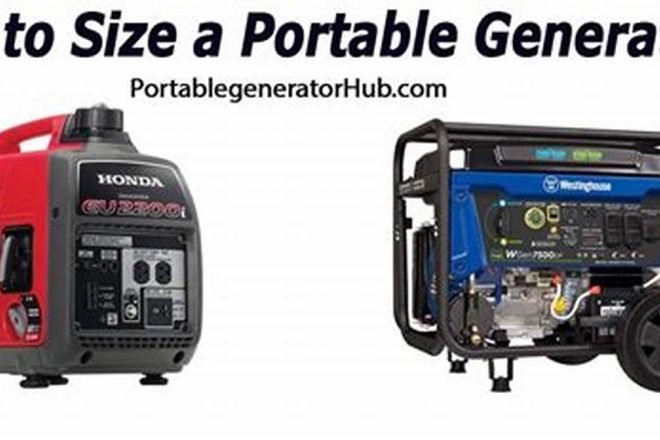
- Key Features: Gas-powered, impressive 7,500 running watts (9,500 peak watts), massive 6.6-gallon fuel tank delivering an 11-hour runtime at 50% load. Built with a hardened steel frame, it's durable and comes with never-flat wheels for easier transport despite its 196-pound weight. Backed by a 3-year warranty.
- Customer Feedback: Users consistently praise its thoughtful design, clear instructions, and extended run time, which is crucial during longer outages. Some isolated reports mentioned difficulty with wheel assembly or units initially working only with propane (if it's a dual-fuel model) rather than gasoline, though these seem to be less common issues.
2. DuroStar DS4000S Portable Generator
- Good For: Medium-powered, temporary support for essential items, offering a good balance of power and portability for smaller homes or specific backup needs.
- Key Features: Gas-powered, 3,500 running watts (4,000 peak watts), provides a notable 14-hour run time on a single tank. A key safety feature is its carbon monoxide alert system with automatic shutoff. Weighs 126 pounds and comes with a solid 5-year warranty, which is excellent for this category.
- Customer Feedback: Many users highlight its durability and reliable, easy startup. While opinions on noise levels were mixed (some found it quiet for its size, others noted typical generator noise), its value proposition is strong. A few customers reported minor assembly challenges.
3. Generac GP6500 Portable Generator
- Good For: Powering multiple devices and larger appliances for extended periods, thanks to its substantial fuel capacity. A reliable workhorse for home emergencies.
- Key Features: Gas-powered, 6,500 running watts (8,125 peak watts), equipped with a very large 7.9-gallon fuel tank that provides 10.5 hours of run time at 50% load. Weighs 177 pounds but includes wheels and a foldable handle for improved mobility. Comes with a 3-year warranty.
- Customer Feedback: Generac is a well-known brand, and users often commend the quality, straightforward assembly, and dependable starts. Common concerns included the generator's noise level (typical for its wattage) and some rare reports of fuel tank leaks.
4. Honda EU2200i Portable Inverter Generator
- Good For: Those seeking a low-maintenance, exceptionally quiet, and compact gas generator ideal for sensitive electronics, camping, or light home backup.
- Key Features: Gas-powered inverter generator, 2,200 running watts (2,200 peak watts), efficient 0.95-gallon fuel tank offers an impressive 9.6-hour runtime at ¼ load. At just 46.5 pounds, it's highly portable. Its standout feature is its ultra-quiet operation, producing less noise than an average conversation (48 to 57 dB). Includes a 3-year warranty.
- Customer Feedback: The Honda EU2200i consistently earns high marks for its ease of use, legendary quietness, and ability to power multiple smaller devices without a hitch. While overwhelmingly positive, a common piece of negative feedback points to occasional difficult starting, especially after periods of disuse, underscoring the importance of proper maintenance.
5. WEN Super Quiet 56235i Portable Inverter Generator
- Good For: A lightweight, very quiet, and more affordable inverter generator option for medium-wattage needs like camping, tailgating, or powering sensitive home electronics.
- Key Features: Gas-powered inverter generator, 2,350 surge watts (1,900 running watts), remarkably quiet at just 51 decibels at quarter load – quieter than a normal conversation. Offers a substantial 10.5-hour run time at quarter load. At a mere 39 pounds, it's one of the lightest options in its power class. Comes with a 2-year warranty.
- Customer Feedback: Users frequently praise its durability, easy startup, and, most notably, its quiet operation, making it a favorite for recreational use. Some users reported it seemed particular about the type of gas used, while others found its power output wasn't quite enough for larger appliances, highlighting the need to accurately calculate your wattage needs. For those looking for quiet operation, this is often a top pick among generators for home backup.
6. EF ECOFLOW RIVER Pro Portable Power Station
- Good For: Extremely lightweight, ultra-portable power for RVing, hiking, device charging, or quiet indoor backup for essentials, without the fumes or noise of gas.
- Key Features: Electric power source (lithium-ion battery), 720 running watts (with an X-Boost mode up to 1,800 watts for certain appliances). Weighs only 16.8 pounds, making it incredibly portable. Can charge up to 10 devices simultaneously and boasts rapid recharging: 0-80% in just 1 hour via AC wall outlet. Supports solar charging. Comes with a 2-year warranty.
- Customer Feedback: Users rave about its incredibly fast charging capabilities (80% in an hour is a game-changer), the convenience of three AC ports, its solar charging option, and supreme portability. Concerns occasionally arise regarding smartphone app connectivity issues or the unit not quite reaching its advertised capacity in real-world scenarios, but overall, it's celebrated for its clean, quiet power. When considering portable power solutions for home essentials, an electric option like this stands out.
Installation and Maintenance Considerations
Once you've chosen your generator, a little planning and regular upkeep will ensure it's ready when you need it most.
Professional Installation for Home Backup
For any gas generator intended to power hardwired home appliances (furnace, well pump, etc.), a licensed electrician should install a transfer switch. This is not optional for safety and compliance. It isolates your home's electrical system from the grid during an outage, preventing dangerous backfeeding and allowing you to safely power select circuits directly from your generator.
Fuel Management & Storage
- Fresh Fuel: Gasoline degrades over time, especially when exposed to air. Use fresh fuel, and consider adding a fuel stabilizer if you're storing gas for longer periods.
- Propane Advantage: Propane has a much longer shelf life than gasoline, making dual-fuel generators attractive for long-term storage of backup fuel.
- Safe Storage: Store fuel in approved containers in a cool, dry, well-ventilated area away from living spaces and heat sources. Never store large quantities of fuel indoors.
Regular Maintenance Schedule
- Run It Regularly: Start your gas generator periodically (e.g., once a month for 15-20 minutes under a light load) to keep the engine lubricated and ensure it's in working order.
- Check Oil Levels: Before each use, check the oil level and top it off if necessary. Follow the manufacturer's recommendations for oil changes.
- Air Filter: Clean or replace the air filter as recommended by the manufacturer.
- Spark Plug: Inspect and replace the spark plug as needed to ensure easy starting.
- Battery (Electric Start): If your generator has an electric start, ensure its battery is charged and in good condition.
Making Your Final Decision: Confidence in Every Watt
Choosing the right portable generator for home backup boils down to balancing power needs, safety, fuel preference, and budget. Start by meticulously calculating your required wattage, then consider which generator type (gas, dual-fuel, electric) best suits your lifestyle and storage capabilities. Prioritize safety features like automatic CO shutoff for gas models.
Remember, a portable generator is an investment in your comfort, safety, and peace of mind. By taking the time to understand your options and adhere to crucial safety guidelines, you'll be well-prepared to face any power outage with confidence. Don't wait for the next storm to hit—start planning your backup power solution today. For more detailed insights and comparisons on reliable portable generators, continue your research and find the perfect match for your home.