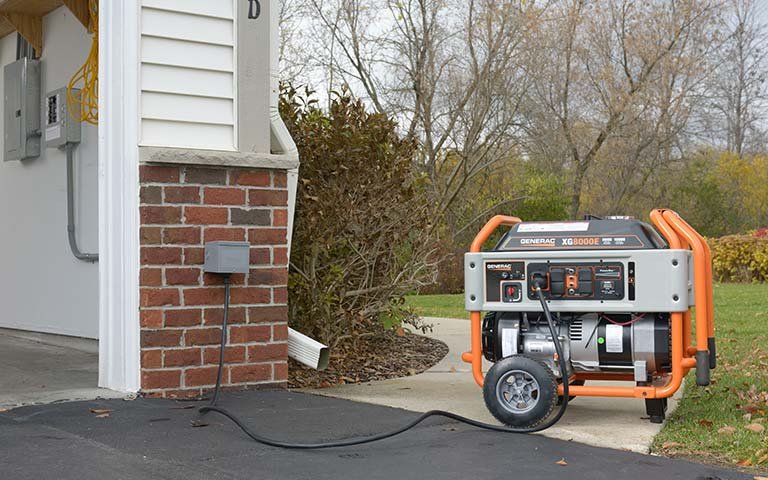
When the lights go out, a sudden silence often blankets the neighborhood, plunging you into an unexpected darkness. For many homeowners, the thought quickly turns to lost food, spoiled medicines, or just the sheer inconvenience of a modern life interrupted. That's where a portable generator comes in – a reliable partner ready to restore comfort and essential power. But knowing how to approach portable generator setup and connection for home use isn't just about flipping a switch; it's about safeguarding your family, your home, and your wallet with a proper, code-compliant system.
This isn't a DIY tutorial for connecting wires. This is your essential guide to understanding the right way to bring backup power into your home, emphasizing safety, legal compliance, and the expertise of professionals. Because when it comes to electricity, guesswork isn't an option.
At a Glance: Your Quick Guide to Safe Home Generator Power
- Safety First, Always: Never, ever run a generator indoors. Place it at least 10 feet from your home, point exhaust away from openings, and always use CO detectors.
- Professional Installation is Non-Negotiable: A licensed electrician is required to install a safe, code-compliant connection system like a transfer switch or interlock kit.
- Never Backfeed: Plugging a generator directly into a wall outlet (backfeeding) is illegal, extremely dangerous, and can be lethal to utility workers.
- Choose Wisely: Select a generator sized to power your essential appliances – not your entire home.
- Know Your Local Rules: Always check with your local Department of Labor and Industries, Planning Department, or Power Company for permits and specific regulations.
- Practice Makes Perfect: Test your generator monthly and understand its operation before an outage strikes.
The Unseen Danger: Why Safety Isn't Optional
Power outages can be inconvenient, but an improperly used generator can turn a minor nuisance into a major disaster. The biggest, most insidious threat is carbon monoxide (CO) – a colorless, odorless, tasteless gas produced by gasoline, propane, or natural gas generators. Breathing it can lead to sickness, unconsciousness, and even death, often before you realize there's a problem.
Beyond CO, you're dealing with raw electrical power, capable of causing fires, severe shocks, or overloading your home's system. Ignoring safety guidelines isn't just risky; it's downright reckless.
Where to Place Your Generator: Creating a Safe Zone
Proper placement is your first line of defense against carbon monoxide poisoning.
- Minimum 10 Feet Away: Position your generator at least 10 feet (3 meters) from your home. This distance helps dissipate exhaust fumes before they can enter through windows, doors, or vents.
- Exhaust Away: Always point the generator's exhaust pipe away from your house, and away from any other buildings, windows, or doors.
- Never Indoors: This cannot be stressed enough: NEVER run a generator inside your home, garage, shed, carport, or any enclosed or semi-enclosed space. The buildup of carbon monoxide can be deadly within minutes. Even an open garage door isn't enough to provide adequate ventilation.
- Level and Stable Surface: Place the generator on a dry, level, stable surface to prevent it from tipping over or sinking into soft ground, which could lead to fuel spills or operational issues.
- Stay Vigilant: Keep children and pets well away from an operating generator. It produces heat, electricity, and noise, all of which can be hazardous.
Your CO Early Warning System: Carbon Monoxide Detectors
Even with perfect outdoor placement, a sudden change in wind direction or a poorly sealed window could allow CO into your home. This is why carbon monoxide detectors are absolutely essential. Install battery-operated or battery-backup CO detectors on every level of your home, especially near sleeping areas. Test them regularly to ensure they are functioning correctly. Think of them as your silent guardian, providing critical minutes for you to react and get to safety.
Decoding Your Home's Electrical Heartbeat: Professional Wiring is Key
You’ve got a generator, but how do you get its power into your house safely and legally? This is where the critical role of a licensed electrician and approved connection methods comes into play. Attempting to bypass these steps is known as "backfeeding," which is illegal, incredibly dangerous, and can send power back down the utility lines, potentially electrocuting utility workers.
The Law and Your Home: Understanding Local Regulations
Electricity isn't a free-for-all. Every region has specific codes and regulations governing electrical installations, including generator connections.
- Make the Call: Before you even think about buying specific equipment, contact your local Department of Labor and Industries, Planning Department, or Power Company. They are your authoritative source for understanding local regulations, required permits, and the legal wiring systems allowed in your area. This step is crucial for compliance, safety, and insurance coverage. Do not rely solely on unverified online advice – rules vary significantly by location.
The Linchpin: Why a Licensed Electrician is Non-Negotiable
This is perhaps the most important takeaway from this entire guide: a licensed electrician is crucial for installing critical components and for inspecting the entire system.
Here's why you absolutely need a professional:
- Safety Assurance: They ensure your system is installed to prevent dangerous backfeeding and protect against electrical hazards.
- Code Compliance: Electricians are up-to-date with the National Electrical Code (NEC) and all local amendments, ensuring your installation meets legal requirements.
- Insurance Coverage: Many insurance policies require code-compliant installations. An unapproved setup could void your coverage in case of an incident.
- Optimal Operation: A professional ensures your system works efficiently and reliably when you need it most.
Approved Connection Methods: Your Safe Gateways to Power
There are two primary, approved methods for connecting a portable generator to your home's electrical system, both requiring professional installation.
- Manual Transfer Switch:
- How it Works: This is the gold standard for portable generator connections and is generally legally mandated in many areas. A transfer switch is a dedicated electrical panel installed between your main electrical panel and a power inlet box (more on that below). When utility power goes out, you manually switch the power source from the utility grid to your generator.
- Safety Features: Crucially, a manual transfer switch physically isolates your home's electrical system from the utility grid, completely preventing backfeeding.
- Circuit Selection: Transfer switches typically come with a pre-selected set of circuits (e.g., specific lights, refrigerator, furnace fan). This helps limit the risk of overloading your generator and simplifies use during an outage.
- Cost & Installation: This is often the more expensive option upfront due to the cost of the unit and the professional installation, but it offers superior safety and convenience.
- Mechanical Interlock Kit:
- How it Works: An interlock kit is a mechanical device installed directly into your existing electrical panel. It physically prevents both the main utility breaker and the generator breaker from being "ON" at the same time. This ensures that only one power source can feed your panel at any given moment, thus preventing backfeeding.
- Flexibility: Unlike a transfer switch, an interlock kit allows you to choose which circuits to power by selectively turning on individual breakers in your main panel, offering more flexibility in load management.
- Legal & Overload Risks: While cheaper, interlock kits can be illegal in many areas, so always check local codes. They also pose a higher overload risk if you're not careful about which circuits you activate, as they don't have the pre-selected circuit limitations of a transfer switch.
- Specific Compatibility: An interlock kit must be meticulously installed by a professional and must be specifically approved for your exact breaker box (same manufacturer, sometimes even specific models). This is not a one-size-fits-all solution.
The Power Inlet Box: Your Outdoor Power Port
Think of the power inlet box as the external "socket" on your house where you plug in your generator.
- Purpose: This outdoor, recessed male connector provides a safe, weather-protected point to connect your generator's power cord to your indoor electrical system (which then leads to your transfer switch or interlock kit).
- Preferred Type: Bottom-mount inlets are often preferred because the cable enters from underneath, providing better weather protection and reducing strain on the connection.
- Placement: The inlet box should be located for easy access for your generator (remember that 10-foot rule!) and typically near your main electrical panel to simplify wiring runs.
- Professional Mandatory: As with transfer switches and interlock kits, professional installation of the power inlet box is absolutely mandatory for safety and code adherence.
Critical Don'ts: Things You Should Never Do
To reiterate:
- Do not connect a generator directly to a wall outlet. This is called backfeeding and is lethally dangerous.
- Do not connect a generator directly to your breaker box without an approved transfer switch or interlock kit.
- Do not connect it to a washing machine or dryer outlet. These are generally 240V outlets, and while some generators can provide 240V, attempting this connection without proper safety devices is extremely dangerous and almost certainly not code-compliant.
Right-Sizing Your Lifeline: Matching Generator to Needs
Portable generators typically provide enough power for essential circuits, not your entire home. The key is to avoid overloading your generator, which can damage the unit, trip breakers, and leave you without power when you need it most.
What Do You Absolutely Need Running?
During an outage, you're looking for survival and comfort, not full luxury. Start by listing your truly essential appliances:
- Lighting: A few critical lights (CFLs or LEDs are most efficient).
- Medical Equipment: CPAP machines, oxygen concentrators, nebulizers.
- Refrigerators & Freezers: To preserve food and medicine.
- Well Pump: If you rely on well water.
- Furnace Fan: To circulate heat in colder climates (the heating elements themselves usually draw too much power for portable generators).
- Basic Communication: Phone chargers, small radio, maybe a TV for news.
Understanding Wattage: A Quick Primer
Appliances have two wattage ratings:
- Running Watts: The power they need to operate continuously.
- Starting Watts (or Surge Watts): The brief burst of power (often 2-3 times higher than running watts) needed to start motors in appliances like refrigerators or sump pumps. Your generator needs to handle these surges.
Here are some typical wattage examples to help you estimate (check your appliance labels for exact figures):
- CFL Lights (full circuit): ~150W
- LED Lights (full circuit): ~60-100W
- Refrigerator (running): 600-800W (but requires 1200-1500W starting)
- Freezer (running): 500-700W (but requires 1000-1400W starting)
- Microwave (medium to large): 1000-1500W
- Television (flat screen): 100-300W
- Sump Pump: 750-1500W (with 1500-3000W starting)
- Small Room Fan: ~500W
- Phone Charger: ~10W
To estimate your generator size:
- List all essential appliances.
- Find their running watts and starting watts.
- Add up the running watts for all appliances you want to run simultaneously.
- Identify the single appliance with the highest starting wattage.
- Add this highest starting wattage to the total running wattage of all other simultaneously running appliances. This gives you your minimum required generator wattage.
What Portable Generators Typically Can (and Can't) Power
A common 3500W (running) petrol generator can typically handle:
- Lights
- TV
- Fans
- A refrigerator/freezer (running one at a time, or ensuring starting watts are accounted for).
- Small electronics and chargers.
Avoid Overload: Portable generators are typically insufficient for high-power appliances such as: - Electric Stoves/Ovens: (Often 2000-5000W per burner/element)
- Central Air Conditioners: (Thousands of watts)
- Electric Water Heaters: (Thousands of watts)
- Electric Clothes Dryers: (Thousands of watts)
If you're using an interlock kit, you'll need to be especially diligent about load management: start with essential items and gradually add others, watching your generator's load indicator (if it has one) or listening for signs of strain. Remember, generator power ratings are sometimes expressed in KVA (kilovolt-amperes); 1 KVA is roughly equivalent to 1000 watts for resistive loads.
For more in-depth guidance on choosing the right model, consider exploring comprehensive guides on portable home backup generators. They can help you compare features, fuel types, and power output to make an informed decision tailored to your specific needs.
Bringing It All Together: The Professional Installation Steps
While you won't be performing these steps yourself, understanding the process for a transfer switch installation (the most common and safest method) can give you peace of mind and help you communicate effectively with your electrician.
- Utility Disconnection & Meter Removal: For safety, your utility company must disconnect power to your home and often temporarily remove the electric meter. This ensures no live power is present during the installation.
- Mount the Transfer Switch: The electrician will mount the transfer switch near your existing main electrical panel.
- Circuit Connection: Flexible conduit will be run from the transfer switch to your main panel. The electrician will then wire the pre-selected critical circuits from your main panel into the transfer switch.
- Install the Power Inlet Box: The power inlet box will be installed on the exterior of your house in the agreed-upon location. Conduit will connect this inlet box to the transfer switch, completing the dedicated generator circuit.
- Testing and Inspection: Before the utility power is reconnected, the electrician will thoroughly test the generator and the transfer switch for proper operation, ensuring all connections are secure and safe. A local inspector may also need to approve the installation before utility power is restored.
Ready for Action: Operating Your Generator Safely
Once your professional system is installed, using your portable generator during an outage becomes a straightforward, safe process.
- Generator Placement: Roll out your generator and place it at least 10 feet (3 meters) from your home, ensuring the exhaust is pointed away from all windows, doors, and vents.
- Connect the Power Cord: Take your heavy-duty generator power cord (typically 10-gauge or thicker, depending on generator size) and securely connect one end to the generator’s output receptacle. Connect the other end to your home's power inlet box. Ensure the prongs match the holes, insert, and typically turn approximately 15 degrees to secure the connection.
- Check Engine Essentials: Before starting, consult your generator's user manual.
- Oil Level: Check the engine’s oil level and add oil if needed.
- Fuel: Ensure you have enough fresh fuel.
- Throttle Position: Confirm the throttle is in the correct starting position (often "choke" for cold starts).
- Other Checks: If applicable, preheat the engine if below 32°F (0°C). Make sure all circuit breakers on the generator itself are in the "OFF" position before starting.
- Start the Engine: Follow your manufacturer's instructions for starting – this might involve opening a fuel valve, turning a key, pulling a recoil start cord, or pressing a start button. Allow the generator to warm up for about 5 minutes.
- Activate Home Power:
- Go to your breaker panel.
- Flip off the utility main breaker. This is absolutely critical to isolate your home from the grid and prevent backfeeding.
- On your transfer switch (or main panel if using an interlock kit), turn on the generator main breaker.
- Slowly flip the individual circuit breakers for the circuits you want to power to the "ON" position, activating loads one by one to avoid overwhelming the generator with a sudden surge.
Power Restored: Smooth Transition Back to Grid Power
When utility power returns, reversing the process correctly is just as important as starting it up.
- Reduce Load: At your transfer switch or main panel, flip individual circuit breakers that were powered by the generator to the "OFF" position. This removes the electrical load from the generator.
- Shut Down Generator: Turn the generator off using its designated switch or key, allowing it to cool down for a few minutes if recommended by the manufacturer.
- Disconnect & Store: Disconnect the power cord from the inlet box and the generator. Store the generator cord in a dry, safe place.
- Return to Utility Power:
- Go back to your breaker panel.
- Flip the utility main breaker back to the "ON" position.
- If using a transfer switch, return it to the "utility" position. If using an interlock kit, move the interlock plate to allow the utility main to be on, then switch off the generator breaker if it wasn't already.
- Now, you can flip your individual household circuit breakers back to "ON" to restore power to your home from the grid.
Keeping Your Power Partner Ready: Generator Maintenance Matters
A generator is an investment that needs regular care to ensure it’s ready when you need it. Think of it like any other engine in your life.
- Regular Servicing: Follow the manufacturer's recommendations for oil changes, air filter checks and replacements, and spark plug inspections. Clean or replace these components as needed.
- Monthly Testing: Start your generator monthly and let it run under a light load (like a couple of work lights) for 15-30 minutes. This lubricates parts, circulates fuel, and ensures it starts reliably.
- Inspections: Before and after each use, visually double-check all connections between the generator, power inlet box, and transfer switch for wear or damage. Inspect and clean spark plugs periodically.
- Fresh Fuel: Use fresh fuel and consider a fuel stabilizer if you're not using it frequently. Stale fuel can cause starting problems and engine damage.
- Spare Parts & Supplies: Keep essential spare parts on hand, such as oil filters, spark plugs, and a supply of fresh, stabilized fuel.
Common Questions About Home Generator Power
Here are quick answers to some frequently asked questions about portable generator use for homes:
Can I just plug my generator into a wall outlet?
Absolutely NOT. This is called "backfeeding" and is illegal and extremely dangerous. It can send electricity back into the utility lines, potentially electrocuting utility workers or anyone who comes into contact with the lines. It can also overload your home's wiring, causing fires.
Why do I need a licensed electrician? Can't I just follow online videos?
A licensed electrician ensures your generator connection system (transfer switch or interlock kit and inlet box) is installed according to strict electrical codes and safety standards. They prevent dangerous situations like backfeeding, ensure your system is properly grounded, and that it can safely handle the generator's output without damaging your home's wiring. Online videos often lack the nuance of local codes and the expertise required for safe electrical work.
What about extension cords? Can't I just run them from the generator to my appliances?
You can use heavy-duty, outdoor-rated extension cords to directly power individual appliances (like a refrigerator or lamp) from the generator's outlets. However, this is not connecting the generator to your home's main electrical system. You should only run cords directly to specific appliances, ensure they are rated for outdoor use and the appliance's wattage, and avoid running them through windows or doorways where they can be pinched or cause CO to enter. Do not use standard indoor extension cords outdoors or with generators.
What's the real difference between a manual transfer switch and an interlock kit?
Both prevent backfeeding, but a manual transfer switch is a dedicated sub-panel that isolates selected circuits from your main panel, making load management simpler and often safer as circuits are pre-determined. An interlock kit is a mechanical device installed in your main panel that physically prevents the utility main and generator main breakers from being on simultaneously, offering more flexibility but also requiring more careful load management by the homeowner. Transfer switches are often seen as the more robust and legally preferred option.
How far is "far enough" for generator placement from my home?
The absolute minimum is 10 feet (3 meters). However, considering wind patterns and the location of windows/doors, sometimes a bit more distance (or a strategic placement around a corner of the house) can provide an extra layer of safety against carbon monoxide infiltration. Always prioritize pointing the exhaust away from any building openings.
Your Next Steps for a Secure Home
Power outages are an unfortunate reality, but they don't have to leave you stranded in the dark. By understanding the proper, safe, and legal ways to connect a portable generator to your home, you're taking a proactive step toward preparedness.
Your most important next step? Contact a licensed electrician and your local municipal authority. They are your essential partners in evaluating your needs, navigating local codes, and installing a secure, reliable system. While a portable generator offers essential backup, its power is only truly beneficial when it's harnessed safely and correctly. Invest in safety, invest in professionalism, and you'll invest in the peace of mind that comes with a prepared home.