The days of clunky, gas-guzzling generators that sound like jet engines are rapidly fading into history. Today, the landscape of home backup power is defined by advanced features and technologies in home backup generators that are smarter, quieter, more efficient, and seamlessly integrated into your modern life. Power outages, whether from severe weather, grid strain, or unforeseen events, are no longer just an inconvenience; they're a disruption to work, health, and comfort. But with the latest innovations, losing power doesn't mean losing control.
This isn't just about keeping the lights on; it's about maintaining your digital connectivity, ensuring critical medical equipment stays operational, and protecting your home from damage. Modern home standby generators are evolving from mere emergency appliances into sophisticated energy management systems, often working in concert with other home energy solutions.
At a Glance: Key Takeaways
- Smarter Control: New generators feature intelligent load management, prioritizing essential appliances and preventing overloads.
- Whisper Quiet: Advanced sound-dampening and variable-speed engines make modern units significantly quieter.
- Fuel Savvy: More efficient engines and advanced fuel management mean less consumption and reduced environmental impact.
- Seamless Integration: Expect deeper connections with smart home systems, remote monitoring via apps, and even battery/solar synergy.
- Future-Proof: The horizon includes AI-driven predictive maintenance and a broader embrace of greener fuel options like hydrogen.
- Investment, Not Just an Appliance: A modern standby generator protects your home, enhances its value, and provides unparalleled peace of mind.
Beyond Basic Backup: The Smart Evolution of Home Generators
What exactly does "advanced" mean when it comes to a home generator? It's a leap forward in every aspect: how they operate, how they manage power, how quiet they are, and how they connect with your home and your life. We're talking about technology that anticipates needs, optimizes performance, and simplifies maintenance, transforming a necessary utility into a truly intelligent appliance.
Precision Power for Sensitive Electronics
Gone are the days when you worried about your generator frying your expensive electronics. Modern home standby generators come equipped with what's often called "True Power™ Technology" or similar sophisticated voltage regulation systems. This ensures the electricity produced has very low harmonic distortion—typically less than 5% (and often as low as 1-2% for premium models).
Why does this matter? Electronics like computers, smart TVs, and medical devices require clean, stable power. High harmonic distortion can cause these devices to malfunction, shorten their lifespan, or even damage them. With advanced generators, you get utility-grade electricity, protecting all your sensitive gadgets and ensuring they run smoothly, even during an outage.
Engine Efficiency & Environmental Responsibility
The heart of any generator is its engine, and here, too, innovation abounds. Today's engines are designed for:
- Optimized Fuel Consumption: Advanced engine designs, often incorporating variable-speed technology, allow the generator to produce only the power needed at any given moment. This significantly reduces fuel consumption compared to older, fixed-speed models that constantly run at maximum RPM, saving you money and extending run times.
- Reduced Emissions: More efficient combustion also translates to lower emissions, making modern generators more environmentally friendly. Manufacturers are actively exploring and integrating greener power options like propane, biodiesel, and even hydrogen, signaling a future less reliant on traditional fossil fuels.
- Commercial-Grade Durability: Many top residential generators now feature commercial-grade engines built for thousands of hours of continuous operation (e.g., 10,000+ hours), offering superior reliability and longevity that far surpasses older designs. This focus on durability means fewer breakdowns and a longer lifespan for your investment, often 15-20 years with proper maintenance.
The Sound of Silence: Quieter Operation Technologies
One of the most common complaints about older generators was the noise. Modern units have tackled this head-on, making significant strides toward near-silent operation.
- Enhanced Mufflers & Sound-Dampening Enclosures: Think of your generator as having a high-tech sound studio around its engine. Advanced mufflers and meticulously engineered, corrosion-resistant aluminum enclosures with layers of sound-dampening materials dramatically reduce operational noise.
- Variable-Speed Operation: As mentioned earlier, variable-speed engines can run at lower RPMs when power demand is low. This not only saves fuel but also significantly reduces noise output during "Quiet-Test™" modes or times of minimal power need.
- Smart Placement: While not a technology feature, the reduced noise allows for more flexible placement options, such as closer to your home (some as close as 18" from a building), which can be a huge benefit for smaller lots or specific installation needs.
Premium models, like the Cummins RS25, boast noise levels as low as 63 dB, which is comparable to a normal conversation. This makes them far more neighbor-friendly and less intrusive to your own peace and quiet, even during an extended outage.
Intelligent Power Management: Never Overload Again
This is where the "smart" in smart generators truly shines. Automatic load management, driven by sophisticated controllers, is a game-changer for whole-home backup.
- Prioritizing Essentials: Imagine your generator detects a surge when your central AC kicks on simultaneously with your well pump. Instead of tripping a breaker or shutting down, smart load management systems (like Generac's "intelligent load management" or Briggs & Stratton's "Symphony® II Power Management") can temporarily shed non-essential loads (e.g., the dryer or oven) to ensure critical appliances like your refrigerator, furnace, or medical devices continue to receive power.
- Seamless Power Distribution: These systems intelligently monitor your home's power consumption, directing electricity where it's most needed without overloading the generator. Once the initial surge passes or the critical appliance demand lessens, the temporarily shed loads are automatically brought back online. This allows a smaller, more cost-effective generator to power more of your home than previously possible.
- No Manual Intervention: The beauty of a standby generator is its automatic operation. When the power goes out, the generator senses it, starts up, and transfers power to your home, all without you lifting a finger. When utility power returns, it seamlessly switches back and then shuts itself down. This automation extends to its intelligent power distribution, meaning you don't need to manually switch circuits on or off.
Understanding the role of an automatic transfer switch is crucial here, as it's the brain that detects outages and facilitates this seamless power transfer, often integrated with the generator's intelligent load management system.
The Connected Home: Smart Features & Remote Monitoring
In an increasingly connected world, your generator isn't left behind. Advanced models offer robust smart features that keep you informed and in control, wherever you are.
- Mobile Link™ & Remote Monitoring: Systems like Generac's Mobile Link™ 2.0 or Kohler's OnCue® Plus allow you to monitor your generator's status from anywhere in the world via a smartphone app, tablet, or computer. You can check battery status, view maintenance schedules, review run history, and receive text or email alerts for any issues. This is especially valuable for frequent travelers or those with second homes.
- Predictive Maintenance Alerts: Many smart systems go beyond simple error codes. They can notify you when it's time for routine maintenance, such as an oil change or filter replacement, based on run hours or operational data.
- Smart Home Integration: While still emerging, the future holds even deeper integration with broader smart home ecosystems. Imagine your generator communicating directly with your smart thermostat to optimize energy usage during an outage, or coordinating with your security system. Smart home integration for backup power is a trend that's picking up speed, promising even greater convenience and efficiency.
These features transform your generator from a "break-glass-in-case-of-emergency" device into an active participant in your home's overall smart infrastructure.
Glimpses into Tomorrow: Future Trends in Home Backup Power
The pace of innovation isn't slowing. The next wave of advancements promises even more energy independence and sophistication.
Seamless Integration with Battery Storage & Solar
The future of home backup isn't just a generator; it's a holistic energy ecosystem. We're seeing greater integration with battery storage and solar panel systems. This creates a powerful hybrid solution:
- Enhanced Resilience: During short outages, your home might run entirely on battery power, charged by solar. The generator acts as a third line of defense, kicking in only for extended outages or when batteries run low.
- Reduced Fuel Reliance: By leveraging solar and battery, the generator's runtime can be significantly reduced, further lowering fuel consumption and environmental impact.
- Peak Shaving & Energy Arbitrage: In some setups, the generator might even be used to charge batteries during off-peak hours when electricity is cheaper, or to power your home during peak demand, reducing reliance on the grid and potentially saving money.
Greener Power Options
While propane is already a cleaner alternative to gasoline, manufacturers are pushing the envelope with even more sustainable fuel sources:
- Biodiesel: Research into biodiesel compatibility is ongoing, offering a renewable liquid fuel option.
- Hydrogen: The ultimate clean fuel, hydrogen offers zero-emission power. While still in early development for residential generators, it represents a significant future trend.
- Dual Fuel Flexibility: Many modern generators already offer dual-fuel capabilities, allowing you to switch between natural gas and propane based on availability and cost.
Artificial Intelligence & Predictive Maintenance
Imagine a generator that can tell you it's about to have a problem before it actually fails. AI and predictive analytics are making this a reality:
- Data-Driven Diagnostics: Using sensors and algorithms, the generator can analyze its own performance data (engine temperature, vibration, fuel pressure, oil levels) to detect subtle anomalies that might indicate a developing issue.
- Proactive Service: Instead of waiting for a breakdown, you (or your service provider) receive an alert that a specific component might need attention soon, allowing for preventative maintenance and ensuring continuous reliability. This minimizes downtime and potentially costly emergency repairs.
- Optimized Performance: AI can also optimize the generator's operation based on historical data and weather patterns, ensuring peak efficiency when you need it most.
Modular & Scalable Systems
The "one-size-fits-all" model is fading. Future generators will offer greater customization:
- Tailored to Your Needs: Whether you have a small cabin or a large estate with multiple outbuildings, modular systems will allow you to scale your backup power solution precisely to your requirements, adding units or components as your needs evolve.
- Easier Upgrades: As technology advances, upgrading individual components will be simpler, extending the lifespan and relevance of your initial investment.
Top Performers: Advanced Generators in Action (2025 Spotlight)
Let's look at some leading models that embody these advanced features, giving you a tangible idea of what's available today.
Generac Guardian 24kW: The All-Rounder
Often touted as the "Best Overall," the Generac Guardian 24kW is a powerhouse of advanced features.
- Mobile Link™ 2.0: Remote monitoring is standard, providing real-time status updates and alerts to your phone, perfect for frequent travelers.
- Intelligent Load Management: This system ensures 100% home circuit coverage without requiring an oversized generator, prioritizing essential appliances.
- True Power™ Technology: With less than 5% harmonic distortion, it delivers clean, stable power for all your sensitive electronics.
- Quiet-Test™ Mode: Runs a weekly self-test at a lower, quieter RPM, ensuring readiness without disturbing your peace.
- Evolution™ Controller: The brain behind its smart operations, offering advanced diagnostics and user-friendly interface.
- Ideal for: Larger homes (2,500-5,000 sq ft) and homeowners who prioritize comprehensive connectivity and automatic power management.
Kohler 20RESCL: Unmatched Reliability
For those living in areas prone to frequent, severe weather, reliability is paramount.
- 5-Second Response Time: One of the fastest in the industry, minimizing disruption during an outage.
- Commercial-Grade Engine: Built for continuous, heavy-duty operation, ensuring long-term dependability.
- PowerBoost™ Technology: Handles demanding motor starting loads (like your AC unit) without dropping power to other appliances.
- Sophisticated Voltage Regulation: Maintains voltage within ±1% of nominal, offering exceptional stability for critical electronics and medical devices.
- Corrosion-Resistant Aluminum Enclosure: Ensures longevity and durability, especially in harsh coastal or humid environments.
- Suited for: Homes with critical electronics, medical devices, or those in regions with unreliable grid power.
Briggs & Stratton 26kW: Highest Output for Large Properties
When you need maximum power for a sprawling home or property, Briggs & Stratton steps up.
- Highest Residential Power Output: At 26kW, it can power very large homes (5,000+ sq ft) or properties with multiple structures.
- Commercial-Grade Vanguard Engine: Designed for 10,000+ hours of operation, emphasizing industrial-level durability.
- Symphony® II Power Management: Their intelligent load management system efficiently distributes power across your entire home.
- Flexible Placement Options: Can be installed as close as 18" from buildings, offering more siting choices.
- Best for: Very large homes, properties with extensive electrical demands (e.g., workshops, pools), or multiple buildings.
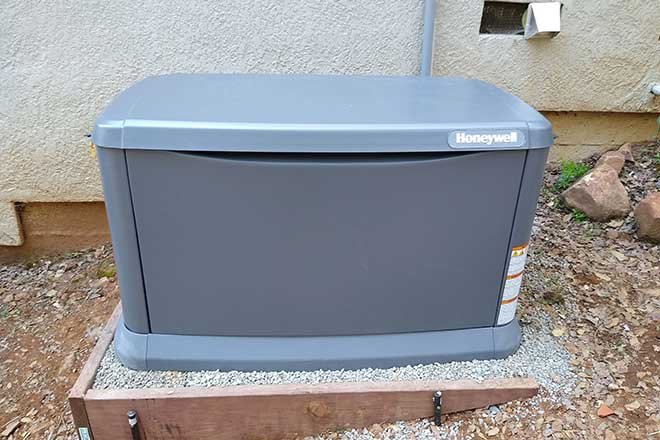
Honeywell 18kW: Best Value with Smart Features
Manufactured by Generac, the Honeywell 18kW offers a compelling blend of features and cost-effectiveness.
- 200A Transfer Switch Included: A significant value add, often an extra cost with other brands, suitable for most average-sized homes.
- Generac Mobile Link Compatible: Benefits from Generac's remote monitoring system, offering smart control without the premium price tag.
- Cost-Effective Solution: Provides robust backup power for average-sized homes (1,800-3,000 sq ft) without breaking the bank.
- A solid choice for: Homeowners seeking Generac's proven technology and smart features at a more accessible price point.
Cummins RS25: The Quiet Powerhouse
For critical applications or areas where noise is a major concern, Cummins stands out.
- Quietest Operation (63 dB): Remarkably quiet, making it ideal for densely populated residential areas or homes where noise sensitivity is high.
- Self-Diagnostic Capabilities: Performs over 500 checks per second, proactively identifying potential issues before they become problems.
- Industry-Leading Cold Weather Performance: Rated for operation down to -22°F (-30°C), ensuring reliability in extreme climates.
- Superior Harmonic Distortion (<2%): Delivers exceptionally clean power, paramount for sensitive electronics.
- Ideal for: Extreme environments, critical power needs (e.g., medical facilities), or situations where noise minimization is a top priority.
Making the Smart Choice: Key Considerations for Your Advanced Generator
Investing in an advanced home backup generator is a significant decision. Here's a breakdown of critical factors to ensure you choose the right system for your needs.
Sizing Your Power Needs Accurately
This is arguably the most crucial step. An undersized generator won't power everything you need, and an oversized one is an unnecessary expense.
- Estimate Your kW: A general rule of thumb is 1kW per 1,000 sq ft, but this is just a starting point.
- Factor in Major Appliances: List all essential items: central AC units, well pumps, refrigerators, freezers, furnaces, water heaters, and critical medical equipment.
- Consider Starting Wattage: Appliances with motors (AC, well pump) have a much higher "starting wattage" (surge) than their running wattage. Your generator must be able to handle these momentary surges. Advanced load management systems can help manage these demands more efficiently.
- Professional Assessment: It's highly recommended to have a qualified electrician or generator dealer perform a load calculation to accurately determine your specific needs. This helps ensure you're looking at sizing your home backup generator correctly.
Fuel Type: Matching Your Resources
Your fuel choice impacts convenience, run time, and cost.
- Natural Gas: The most convenient option. Connects directly to your home's gas line, providing an unlimited supply during an outage. Ideal for urban and suburban areas with existing natural gas infrastructure.
- Propane (LP): Requires an on-site storage tank. Excellent for rural areas without natural gas access. Tank size determines run time. Can be delivered and refilled.
- Dual Fuel: Some models offer the flexibility to switch between natural gas and propane. This can be beneficial if one fuel source becomes unavailable or cost-prohibitive.
Consider natural gas vs. propane generators carefully, weighing availability, cost, and logistics.
Professional Installation: A Non-Negotiable
A standby generator isn't a DIY project. Professional installation is essential for safety, compliance, and warranty.
- Permits & Codes: Installation involves electrical and gas connections, requiring permits and adherence to local building codes.
- Authorized Dealers: Ensure your generator is installed by an authorized dealer to maintain warranty validity.
- Costs: Installation typically ranges from $3,000-$5,000, depending on the complexity (distance from gas line, electrical panel, etc.).
- Clearance Requirements: Generators must be placed with specific clearances from buildings, windows, and property lines. Advanced models often have reduced clearance requirements (e.g., 18"), offering more flexibility.
Transfer Switch Options: Standard vs. Smart
The transfer switch is the bridge between your home's electrical panel and the generator.
- Standard Automatic Transfer Switch (ATS): Detects outages and automatically switches your entire home's electrical load to the generator. Rated by amperage (e.g., 200A or 100A) to match your home's electrical service.
- Smart/Managed Transfer Switch: Integrates with the generator's intelligent load management system. It can prioritize specific circuits, temporarily shedding non-essential loads to prevent generator overload and maximize efficient power delivery. This is a key feature for enabling whole-home backup with a smaller generator.
Noise Levels: A Factor for Peace (and Neighbors)
Generator noise is measured in decibels (dB).
- Range: Most standby generators operate between 63-70 dB.
- Lower dB is Better: For residential areas, a quieter generator (e.g., 63-65 dB) is highly desirable, especially during extended outages. Remember that decibel scales are logarithmic, so a few dB difference can feel much louder.
Smart Features & Monitoring: Your Command Center
Don't underestimate the value of connectivity.
- Mobile Apps & Remote Monitoring: Look for systems that offer real-time status updates, remote start/stop capabilities, and diagnostic alerts via smartphone.
- Email/Text Alerts: Critical for immediate notification of power outages, low fuel, or maintenance needs.
- Smart Home Integration: While still developing, consider models that offer compatibility with broader smart home ecosystems for future expansion.
The Long View: Costs, Lifespan, and Value
A home standby generator is a significant long-term investment.
Long-Term Costs to Consider
- Annual Maintenance: Budget $200-$400 per year for routine inspections, oil changes, and filter replacements. Essential generator maintenance tips are critical to ensure longevity and reliable operation.
- Fuel Efficiency: While natural gas offers unlimited supply, propane users must factor in refill costs. More efficient engines mean lower fuel consumption over time.
- Parts Availability: Choose a reputable brand with readily available parts and a strong dealer network.
- Extended Warranty Options: Consider purchasing an extended warranty for added peace of mind beyond the standard manufacturer's warranty.
Lifespan & ROI
- Longevity: With proper annual maintenance, a quality standby generator can last 15-20 years, equating to 2,500-3,000 hours of operation.
- Increased Home Value: A permanently installed home standby generator can increase your home's value by 3-5%, according to real estate experts. It's a highly desirable amenity for potential buyers, especially in regions prone to outages.
- Peace of Mind: Beyond monetary value, the ability to weather any storm comfortably and safely with continuous power is invaluable.
Advanced vs. Portable: Knowing the Difference
While this guide focuses on the sophistication of standby generators, it's worth briefly touching on their portable cousins. Portable home backup generators serve a different purpose, typically offering temporary power for a few essential appliances, requiring manual setup, and lacking most of the advanced automation discussed here. Standby generators are a permanent fixture, always ready, always watching.
Addressing Common Questions & Misconceptions
"Are these new generators really that quiet?"
Yes, significantly. While not silent, premium models like the Cummins RS25 at 63 dB are comparable to a quiet conversation or an air conditioner compressor, a far cry from the roaring machines of yesteryear. The variable-speed technology helps a lot here, as they don't always run at full throttle.
"Can an advanced generator power my whole house?"
Absolutely. With intelligent load management systems, even a moderately sized generator (like a 20-26kW) can effectively manage and power 100% of a typical home's circuits by prioritizing essentials and shedding non-critical loads temporarily.
"Are they difficult to maintain with all these advanced features?"
Ironically, advanced generators often simplify maintenance. Their smart controllers provide diagnostics and send alerts when service is due, often reducing the guesswork and making professional servicing more efficient. Regular annual maintenance by a certified technician is still crucial.
"Is it safe for my smart home devices?"
Yes, thanks to "True Power™ Technology" and similar systems that deliver clean, stable power with low harmonic distortion. This protects sensitive electronics, ensuring your smart home devices, computers, and even medical equipment operate safely.
Your Path to Uninterrupted Living
The era of truly smart, efficient, and user-friendly home backup power is here. The advanced features and technologies in home backup generators aren't just flashy add-ons; they represent a fundamental shift towards greater reliability, convenience, and peace of mind. From intelligent load management to remote monitoring, quieter operation, and even the promise of AI-driven predictive maintenance, these systems are designed to seamlessly integrate into your life, making power outages a historical footnote rather than a modern crisis.
By carefully considering your needs, understanding the available technology, and prioritizing professional installation and ongoing maintenance, you can ensure your home remains a sanctuary of comfort and connectivity, no matter what the grid throws your way. Don't wait for the next storm; explore the possibilities of advanced home backup generators today and secure your family's uninterrupted future.